Eye to Eye with a Desert Kestrel
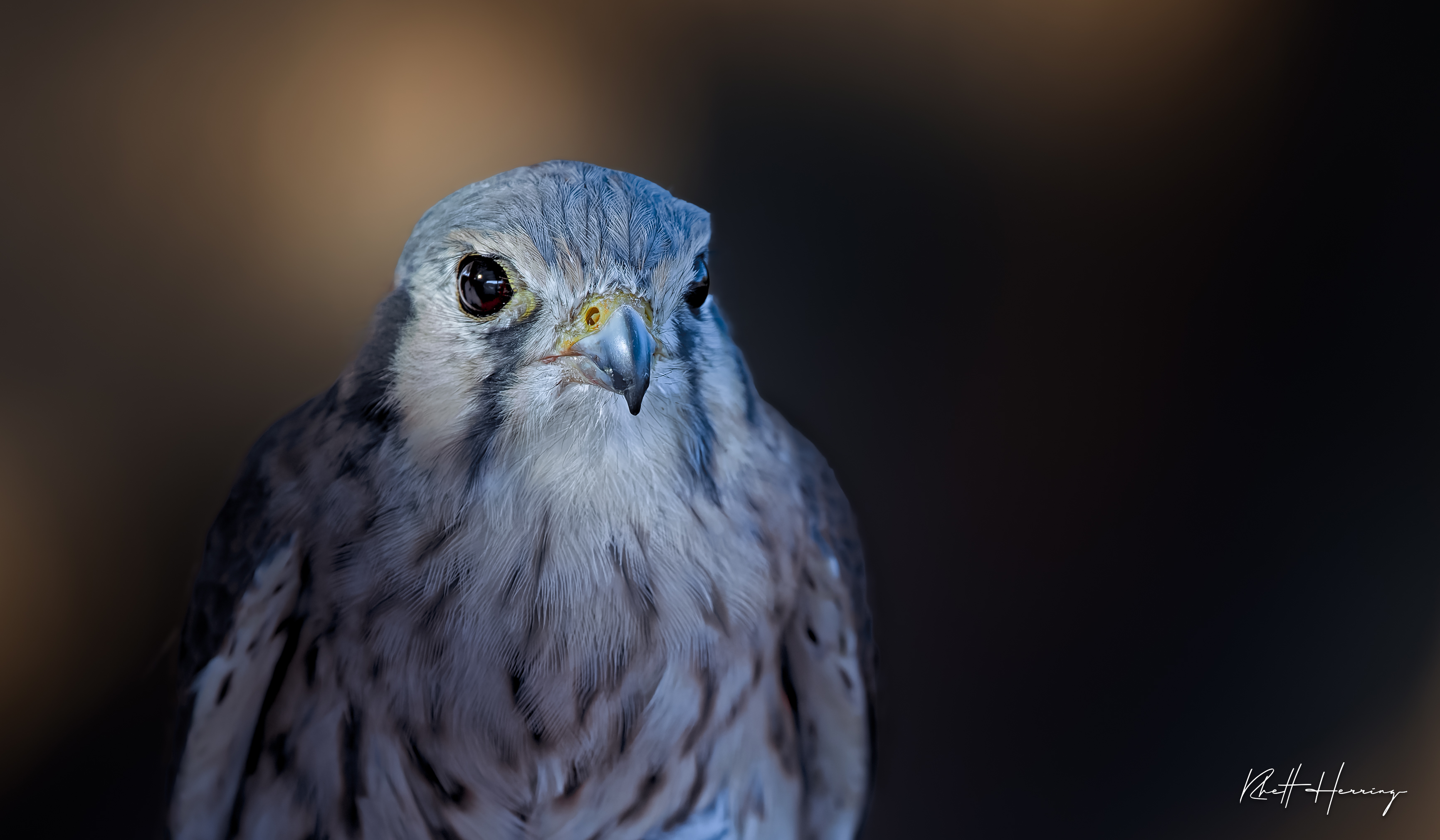
The American Kestrel is a bird I never tire of, and getting this close felt like a small gift. They're our smallest falcon, scarcely larger than a mourning dove, yet everything about this one's gaze says raptor. Notice those two dark vertical marks beneath the eye, the mustache and sideburn that every kestrel wears, and the slate-blue cap and wing coverts that mark this as a male. The buff wash across the breast and the fine dark spotting are details you rarely register when they're hovering over a roadside field.
Out here in Arizona, kestrels are one of the easier falcons to find year-round. I watch for them on power lines, fence posts, and the bare upper branches of mesquite along open desert and grassland, often pumping their tails as they scan for grasshoppers, lizards, and small rodents. This was a patient, cooperative bird, and I let the long lens do the work while I kept my movements slow and read its body language.
For the portrait I worked at a wide aperture to melt the warm, shadowed background into that smooth amber-to-near-black gradient, then put my focus squarely on the near eye. The light was soft and low, which kept the blues honest and let the catchlight do its job. With a bird this small and alert, I'd rather wait for it to settle than push for a closer frame and lose the moment entirely.
The American Kestrel image was captured by me at the "Arizona-Sonora Desert Museum"