The Backyard Cardinal and a Wet Perch
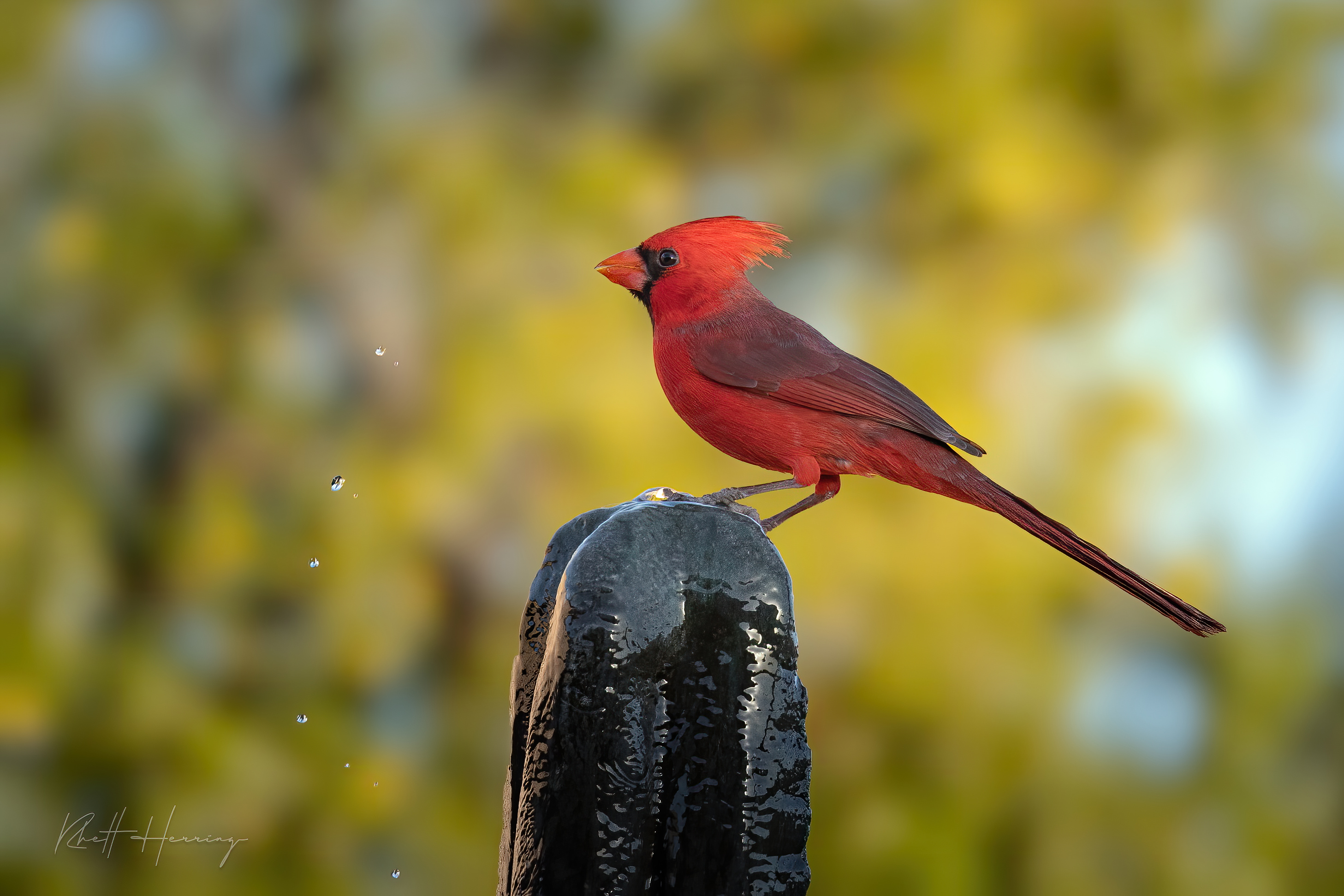
I almost didn't bother setting up this morning. It was late February, the light was flat at first, and I'd been promising myself I'd actually shoot the birds coming to the water feature in my own backyard instead of always driving an hour to find something rarer. Turns out the best subject was right outside the kitchen window the whole time.
This is a male Northern Cardinal, and I don't think they ever stop being worth photographing. People back east treat them like sparrows because they're everywhere, but out here in the Sonoran Desert a cardinal is a different kind of gift. We share the territory with Pyrrhuloxia, the gray desert cousin, so I'm always double-checking the bill and that wash of color before I get excited. This guy left no doubt. Full red, that black mask running down into the throat, and the crest up like he meant business.
He landed on the wet basalt of my bubbler, which is exactly the spot I'd hoped he'd choose. You can see the water still beading and dripping off the stone, and there's a string of droplets falling on the left side of the frame. I didn't plan those. I was firing in short bursts hoping for a clean head turn, and the drops just happened to be in the air when he held still and looked left. Sometimes the camera catches things your eye misses in the moment.
The background is what made me keep this one. Those out-of-focus yellows and greens are a palo verde and some brittlebush starting to think about spring, thrown soft by an 800mm lens wide open. I was maybe forty feet back, shooting from a low chair so I'd be closer to his eye level. That low angle matters more than people think. Shoot down on a bird and it looks like a snapshot. Get level with him and he looks like he owns the perch.
Cardinals in Arizona stick to mesquite bosques, desert washes, and yards like mine that offer water and a little cover. Water is the whole secret here. In dry country a reliable drip will pull in birds that wouldn't touch a seed feeder, and February through April is prime time, before the heat clamps down and the breeding pairs get busy. I keep the bubbler running and the perches natural, and I've learned to just sit still and let them forget I'm there.
For settings, I was at 1/2000, f/5.6, ISO 1600, leaning on shutter speed to freeze those water drops. I ran it through some noise reduction afterward, which is honestly part of how I shoot now in lower light. No regrets. He sat for maybe eight seconds total, then dropped down for his drink. I never even saw him leave.